




How to Grow Clematis: Planting, Care and Pruning Groups
How to Grow Clematis: Planting, Care and Pruning Groups
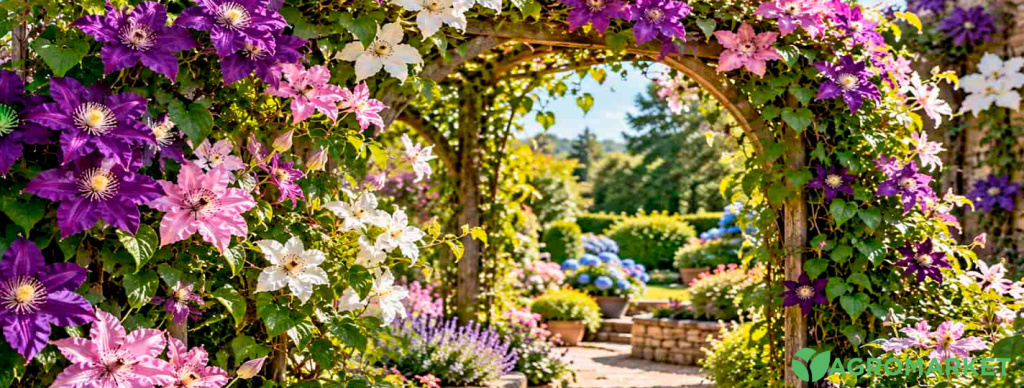
Clematis is one of the most versatile flowering climbers for the garden. Depending on the variety, it can cover a trellis, decorate an obelisk, climb along a fence or add colour to an arch. With hundreds of cultivars offering different flower shapes, colours and flowering periods, there is a clematis for almost every garden style.
Healthy clematis plants can provide a spectacular display for many years. The key is to choose the right position, establish a healthy root system and understand which pruning group your variety belongs to.
Choosing the Right Clematis
Before learning how to grow clematis, think about where the plant will grow and when you would like it to flower. Some varieties are compact enough for containers, while vigorous cultivars can cover large walls, pergolas and fences.
This climbing vine needs a structure that its leaf stalks can wrap around. A trellis, wires or another relatively narrow support works well. An obelisk is a practical choice for a border or large container, while a fence can be fitted with wires or mesh to help shoots climb.
Flowering time is also important. Combining early-flowering and late-flowering varieties can provide colour over a much longer season.
When to Plant Clematis
The best answer to when to plant clematis is generally spring or early autumn. At these times the ground is usually workable and temperatures allow the roots to establish without the stress of extreme heat or severe cold.
Choose a position where the upper part of the plant receives plenty of sun while the root zone remains relatively cool. Many varieties flower best with good light, although some tolerate partial shade. Fertile, well-drained soil is essential because permanently waterlogged ground can damage the roots.
How to Plant Clematis
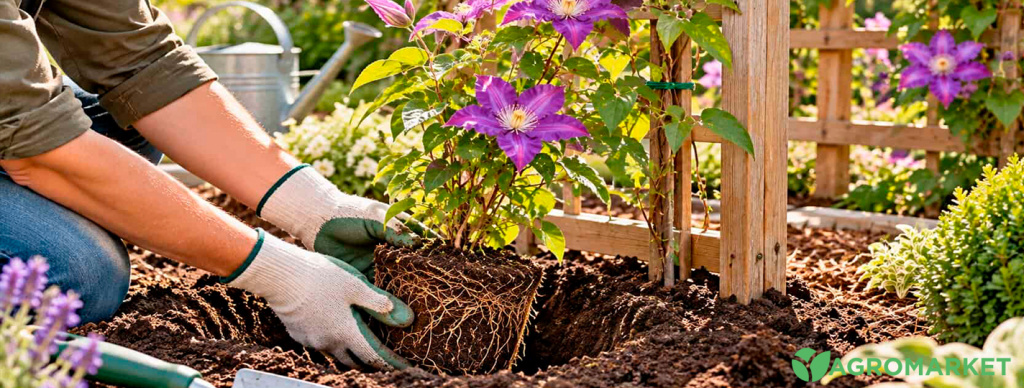
Knowing how to plant clematis correctly helps the plant establish a strong foundation. Prepare a generous planting hole wider than the root ball and loosen the surrounding soil. Mix in well-rotted compost where necessary to improve structure and fertility.
For many large-flowered cultivars, position the root crown approximately 5–10 cm below the surrounding soil level. This deeper planting can encourage additional shoots to develop from below ground and provides some protection around the base of the plant.
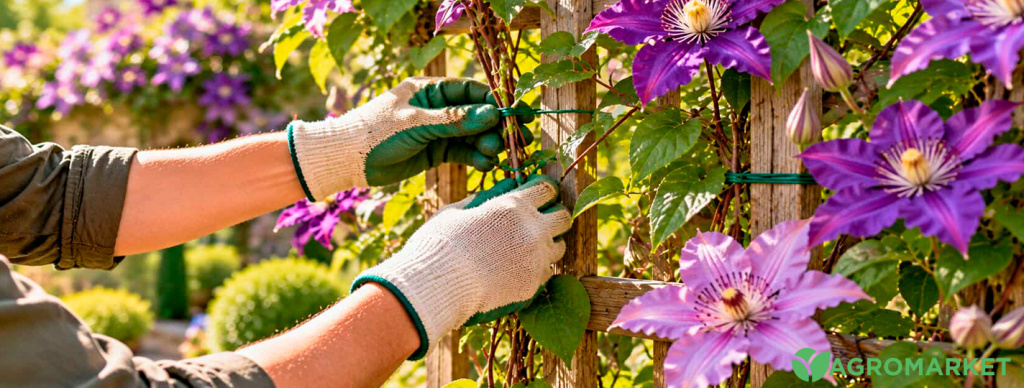
Backfill carefully, firm the ground and water thoroughly. Guide the young stems towards their support and tie them loosely if necessary until they begin climbing independently.
How to Care for Clematis
Understanding how to care for clematis is largely about maintaining steady moisture and healthy growth. Regular watering is especially important during the first growing season and during prolonged dry periods. Avoid allowing newly planted specimens to dry out completely.
Apply mulch around the base to help retain moisture and keep the roots cool, but avoid piling material directly against the stems. An annual layer of compost can also improve the soil.
Established plants benefit from appropriate fertiliser during active growth, particularly where the ground is poor. Avoid excessive feeding and always follow the instructions for the chosen product. Continue guiding new stems onto their support as they grow.
Understanding Clematis Pruning Groups
The most important part of pruning is knowing which pruning group your plant belongs to. Clematis varieties are traditionally divided into three groups according to when they flower and whether blooms develop on old or new stems.
Group 1: Early-Flowering Clematis
Group 1 varieties flower early in the season on growth produced the previous year. They generally require minimal pruning. After flowering, remove dead or damaged growth and shorten stems only when necessary to control the size or shape of the plant.
Group 2: Large-Flowered Clematis
Group 2 usually includes cultivars that produce their first flush in late spring or early summer on older stems, often followed by another display on newer growth. Prune lightly in spring, removing dead sections and shortening selected shoots to healthy buds. Heavy pruning can reduce the first display.
Group 3: Late-Flowering Clematis
Group 3 plants produce their flowers on new growth made during the current season. These varieties benefit from strong pruning in late winter or early spring. Old stems can be cut back to a healthy pair of buds relatively close to the base, allowing vigorous new shoots to develop.
When to Prune Clematis
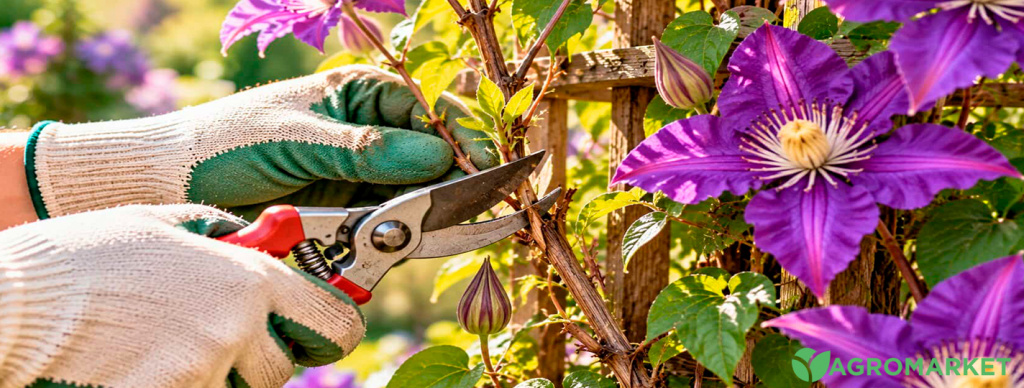
The answer to when to prune clematis therefore depends on its group. Group 1 is normally tidied after flowering, Group 2 receives relatively light pruning around late winter or early spring, and Group 3 is cut back hard before vigorous spring growth begins.
Keep the plant label after planting, as knowing the cultivar makes identifying the correct pruning method much easier. If the name has been lost, observing when and where the plant produces flowers can help determine the appropriate approach.
Growing Clematis in a Pot
Many compact cultivars grow successfully in a large pot or container. Choose a substantial container with drainage holes and use a fertile, moisture-retentive but free-draining growing medium. A larger volume of compost protects the roots from rapid changes in temperature and moisture.
Add a strong support at planting time and place the container where the stems can receive sufficient light. Container-grown plants require more frequent watering than those growing in open ground and may also need regular feeding during the growing season.
Common Clematis Problems
One of the best-known problems is clematis wilt, which can cause shoots to collapse suddenly. Remove affected stems back to healthy material and dispose of diseased growth. Deep planting of suitable large-flowered varieties may allow healthy shoots to regenerate from below ground.
Pests can also attack fresh shoots and buds, so inspect plants regularly. Weak flowering may result from insufficient light, unsuitable pruning, drought stress or excessive fertiliser that encourages foliage rather than flowers.
Healthy roots, consistent watering and correct pruning are usually the best foundation for preventing long-term problems.
Clematis Through Winter
Most hardy garden varieties need relatively little special winter protection once established. Keep the root zone protected with organic mulch in colder conditions and ensure containers do not remain saturated during wet weather.
Some stems may look dry and lifeless during dormancy but still contain viable buds, so avoid cutting indiscriminately until you know which pruning group the plant belongs to. Group 3 varieties can then receive their annual hard prune before new spring growth begins.
Enjoying Clematis Year After Year
The secret to successful clematis is a combination of good planting and appropriate pruning. Give the roots fertile, well-drained ground, provide reliable support and maintain adequate moisture while the plant becomes established.
Most importantly, identify the correct pruning group and treat the stems accordingly. With the right position and a simple annual care routine, clematis can grow strongly and cover garden structures with an impressive display of flowers season after season.


